Why the Ball Can Travel Farther Along One Side of the Field
Why the ball can travel farther along one side of the field: learn how fielders shape scoring lanes and influence a bowler’s line and a batter’s choices.
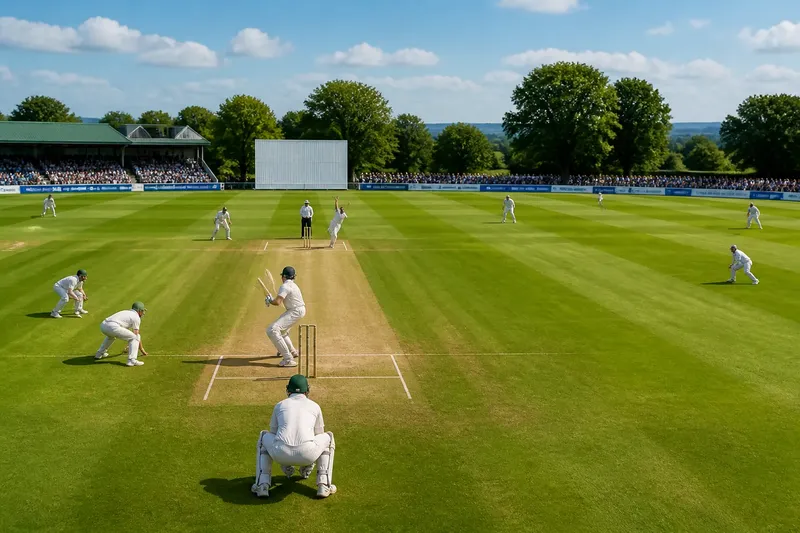
Why can the ball travel farther along one side of the field? A cricket field setting can leave a scoring lane open while placing fielders in the routes a batter is more likely to use. The gaps are invitations, not instructions: the delivery still determines which shots are possible.
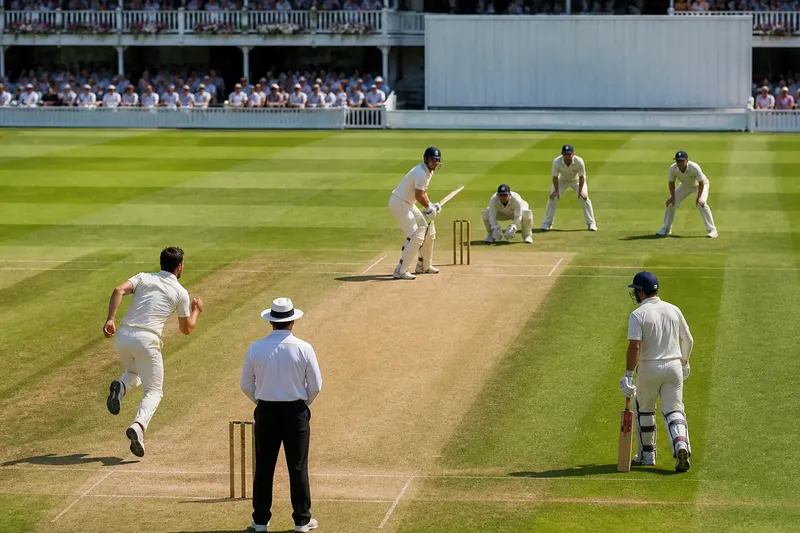
Imagine a right-handed batter facing a bowler delivering over the wicket. The captain places a close catcher on the off side and a deep fielder behind square on the leg side, but leaves the straight boundary unguarded. The bowler’s line and length will decide whether the batter can reach that open lane.
Read the scoring lanes
Instead of counting fielders, divide the ground into routes: behind point, through cover, straight down the ground, and around the leg side from midwicket to fine leg. For a left-handed batter, off and leg sides reverse. Then note which routes have close fielders and which have protection near the boundary.
- Close on the off side: If a slip or short cover is waiting, then a mistimed push or drive is riskier; the batter may defend, leave the ball or look for another route.
- Open behind square: If that lane is vacant and the ball is easy to guide, then the batter may steer or glance it there; if the line or length makes contact awkward, the batter may leave or defend.
- Open straight: If the ball is full and the batter is balanced, then a straight drive may be available; if not, a safer defence or a different shot is the alternative.
- Boundary fielder in place: If a deep fielder guards a likely shot, then a boundary is harder to find through that route; the batter may take a single into the ring or aim elsewhere.
- Unprotected boundary: If the ball can be hit cleanly into the vacant boundary lane, then a boundary may be possible; if the delivery is out of reach or poorly suited to the shot, the batter should choose a safer response.
- Handedness changes: If the next batter is left-handed, then the captain should reassess the off-side and leg-side map; if the existing positions still cover the likely routes, there may be no reason to move a fielder.
A gap does not make a shot easy. The bowler may target a different line or length, and the batter still has to reach the ball safely and control its direction.
Connect field and delivery
A field often hints at the bowler’s intended plan. Close catchers on the off side may invite a delivery that draws the batter forward, while a deep fielder on the leg side can discourage a powerful shot in that direction. But the bowler must execute the plan: too much width may invite a cut, while a delivery on the pads may give the batter a chance to work the ball into leg-side space.
Length matters as much as line. A shorter ball and a full ball aimed at the same side ask for different strokes. A deep square-leg fielder may protect against a pull, for example, while leaving a single into the inner ring available. The captain may accept that single rather than leave the boundary route open.
Fielders also affect the batter’s safest option. A gap may be useful for a controlled single but unsuitable for a boundary shot if the ball is difficult to reach. A captain can move a fielder after a shot or when a new batter takes strike, where the playing conditions permit. The next delivery may then present a different map.
Track a changing plan
Say a right-handed batter faces a made-up over. The captain starts with a slip and close cover, leaves the straight boundary open and places a fielder at deep midwicket. The bowler is asked to bowl full outside off, then vary the length without losing control.
- First delivery: It is full outside off. The batter reaches for a drive and takes a single into the ring. The captain sees that the batter is willing to reach, but the shot does not prove a settled preference.
- Second delivery: The bowler pitches shorter on the same line. The batter leaves it. The open space behind point is irrelevant because this ball is not easy to cut.
- Third delivery: The bowler goes fuller and straighter. The batter drives into the unguarded straight lane and takes a run. The captain sees that the open route can be used when the line allows it.
- Fourth delivery: The captain moves a fielder to long-off and keeps close cover. The bowler returns to a fuller line outside off. The straight boundary is now protected, so the batter may take a single or try another route.
- Fifth delivery: The batter taps towards cover, where a ring fielder stops the ball. The field has made that low-risk single harder.
- Sixth delivery: The bowler drifts onto the pads. The batter turns the ball into leg-side space for a single. The bowler’s error has reopened a route the captain was not trying to offer.
This invented sequence shows the trade in each decision: the captain closes one route, the bowler tries to make the batter use another, and the batter responds to the actual delivery. It is not worth trying to predict the exact shot from the field alone; the ball can make a planned route irrelevant.
Account for match conditions
The captain must balance boundary protection against control of the inner ring. A fielder stationed near the boundary cannot also guard a vacant pocket close in, so the batter may take a single even when a boundary shot is well covered. The right choice depends on the intended bowling plan and the risks the captain is prepared to accept.
The number of fielders allowed outside the inner circle can depend on the format and stage of the innings. Captains must follow the Laws and the competition’s playing conditions; for an actual match, the umpires apply the rules in force.
Conditions can also change the value of a lane. A wet outfield may make stopping or returning the ball harder, while a slow surface may reduce the reward for a well-timed stroke. The captain may then favour boundary protection, close catching positions or tighter control of singles, depending on the situation.
What does each field change mean?
Why does the leg side look more open?
The captain may be protecting a likely off-side shot with close catchers or a deep cover fielder, while accepting space on the leg side. The bowler then has to choose between attacking the stumps and risking a glance, or bowling wider and risking a cut or drive.
Does an empty gap mean an easy boundary?
No. The ball must reach the lane and suit a shot the batter can play safely. If the line or length makes that difficult, leaving or defending may be the better choice.
Why move a fielder after one shot?
A shot can reveal the batter’s reach, timing or preferred direction, giving the captain a reason to adjust. One shot is only a clue, so the bowler’s next delivery and the batter’s response may change the plan again.
Can a field force a particular stroke?
No field dictates the batter’s shot. It can make some routes less attractive and others more visible, but line, length, judgement and conditions still shape the choice.
To understand why the ball can travel farther along one side of the field, watch the space the captain leaves and the delivery needed to reach it. When a fielder moves, ask which route has become harder and which remains available. That tells you more about the plan than trying to guess the next stroke from the field alone.