The ‘Gentleman’s Game’ Myth and the Work It Leaves Out
The gentleman’s game myth makes cricket sound effortless. Learn to spot the skill, labour and competitive pressure hidden beneath its familiar language.
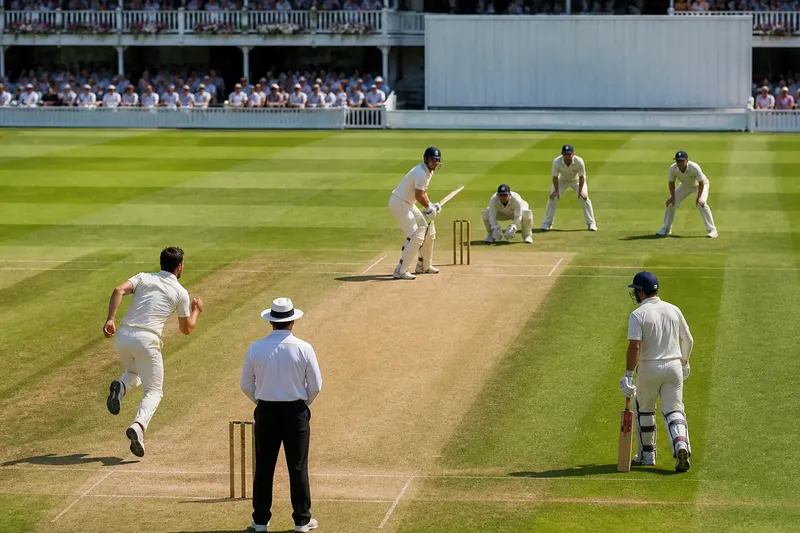
Why does cricket get called the gentleman’s game when a bowler is sprinting in and a batter is bracing for a fast delivery? The gentleman’s game myth can make the sport sound mild, but a single over reveals a contest shaped by skill, effort and tactical choices.
The phrase is best treated as an ideal of conduct, not a full description of play. It may refer to respect for opponents or acceptance of an umpire’s decision; it cannot account for every demanding action on the field. To see what it leaves out, focus on choices you can actually observe: a change in field, a decision to defend or an adjustment to the bowling plan.
Preparation and skill
Watch a player prepare, act and reset. A batter may settle their stance before facing the ball; a bowler may mark a run-up and return to position after delivery. What looks effortless often depends on coordination and repeated practice. There is no need to interpret every movement: notice the action and how the player responds afterwards.
The contest in an over
A bowler tries to deliver a difficult ball while the batter reads its line and length, then chooses whether to leave, defend or attack. The field helps reveal the plan. A close fielder may invite caution, while an open area can tempt the batter to play towards it. The next delivery may bring a new line or a changed field in response.
Say a batter has defended several balls and notices a fielder move close to the bat. The batter sees space on the leg side and tries to steer the next delivery there; the expected visible result is either a shot into that gap or a bowling adjustment that makes it harder to use. This invented situation shows how a quiet over can hold a sharp tactical exchange without requiring guesses about either player’s thoughts.
Pressure and conduct
As a match tightens, batters may take more time before facing a delivery, bowlers may alter their plans, and captains may change the field. These are observable signs of adaptation, not proof of what a player feels. A respectful contest can still be physically demanding and fiercely competitive.
Descriptions such as “a soft dismissal” or “a costly spell” can flatten the decisions behind an outcome. Consider what the player could see at the time, rather than judging only with hindsight. Recognising pressure does not excuse poor conduct; it simply separates the challenge of the contest from the standard of behaviour expected.
What does the phrase hide?
Does “gentleman’s game” mean cricket is gentle?
No. The phrase expresses an idealised association with conduct, not the full character of play. Cricket still involves physical effort, tactical pressure and direct competition.
Is the phrase only about manners?
It often signals expectations of fair play, respect and restraint. Used as a complete description, though, it can hide the training and judgement behind a performance.
How can I read a quiet over?
Follow the field, the bowler’s apparent plan and the batter’s response across several deliveries. You can describe those choices without claiming to know what either player was thinking.
Does pressure excuse poor conduct?
No. Competition does not remove expectations of respect or fair play. It helps explain the difficulty of a moment, not excuse how someone behaves.
What to notice after play
When the match ends, accounts may credit one decisive moment and leave earlier contributions in the background. You can keep the picture balanced by recalling a field change, a batter’s response or a bowler’s adjustment. Not every pause needs decoding; reading meaning into every gesture is not worth the effort.
The gentleman’s game myth is useful when it prompts a question about conduct, but misleading when it stands in for the whole sport. At your next match, follow one bowler through an over and watch how the batter answers. The gentleman’s game myth then becomes easier to place: an ideal of behaviour beside a contest that demands skill, effort and adaptation.