Keeping a First Cricket Scorecard: What to Notice Between Overs
A first cricket scorecard becomes easier to follow when you record each event, update the total and track wickets and batters without losing the innings’ sequence.
How do you keep a first cricket scorecard without missing the match? Write down each delivery’s result, update the team total, and mark any wicket or change of striker. A cricket scorecard is easier to follow when you capture those essentials before adding detail.
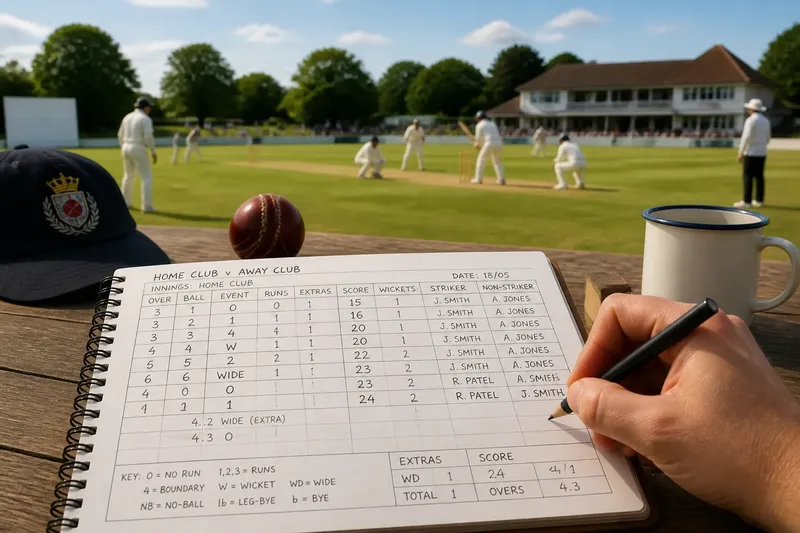
Start with a small grid and a simple order: event, runs added, new total. Check who faces next after a wicket or at the end of an over. You can add individual batter figures and dismissal details once that basic record feels manageable.
Prepare the card
Use a printed scorebook or draw columns in a notebook for the over and ball, event, runs added to the team total, score after the delivery, and wickets. Leave space for the batters’ names and any dismissal notes. At the top, write the teams, date and innings.
- Delivery order: Check that each entry follows the previous one; if the sequence is unclear, leave space and confirm the event before continuing.
- Event: Mark a dot, runs, boundary, extra or wicket; if your shorthand could confuse another reader, add a key.
- Team total: Check the previous score and the runs added; if they do not reconcile, review the last entry before recording the next total.
- Wickets: Check whether a batter was dismissed; if so, record the wicket and batter’s name, otherwise leave the wicket count unchanged.
- Striker: Check who will face the next legal delivery; if the batters have changed ends or a wicket has fallen, update the name, otherwise keep the current striker.
- Extras: Check whether the umpire has called a wide or no-ball, or whether byes or leg-byes were scored; if so, keep those runs separate from the batter’s runs, otherwise record no extra.
Agree on a few marks before play. A scorebook may use “0” for no run, “4” for a boundary and “W” for a wicket, but conventions can differ. Follow the book’s key or write your own clearly on the page.
Record the essentials
Watch the delivery first and write once the ball is dead. For each event, note what happened and how it changes the team total. If you are also tracking individual figures, record which runs belong to the striker and which belong to extras.
A dot or zero means no runs were added from that delivery. For runs completed by the batters or a boundary, add the appropriate amount to the team score. Use the umpire’s signal and the scorer’s ruling where the result is unclear rather than guessing.
Wides and no-balls are extras and do not count as legal deliveries in the over. Byes and leg-byes also add to the team total without being credited to the striker as runs off the bat. A delivery can include more than one event, so write down the ruling and resulting total rather than relying on a single symbol. For a disputed or unusual entry, ask the official scorer or umpire.
Check the running score
After each delivery, add the runs to the previous team total. If the card shows 18 and the next event adds two, write 20 as the new total. This simple check can catch a missed extra or an accidental double-count while the event is still fresh.
Write the team score as runs followed by wickets, such as 42/2: 42 runs scored and two wickets lost. Track batter runs separately if your card has room. Extras can raise the team total without raising either batter’s score, so those figures may not add up to the innings total.
Resolve common questions?
What counts as a dot ball?
A dot ball is a legal delivery on which the batting side scores no runs. It records the result, not whether the batter defended, missed or played the ball to a fielder.
Does a wide count in the over?
A wide adds an extra and does not count as a legal delivery. Record the umpire’s call and any additional runs, then keep the legal-ball count separate.
Why can the team total rise without batter runs?
Byes, leg-byes, wides and no-balls are recorded as extras rather than runs off the striker’s bat. Keep them distinct so the team total and individual batter figures remain understandable.
When does the striker change?
Update the striker when the batters change ends or a wicket brings in a new batter. At the start of an over, check who is due to face rather than relying on memory.
Mark wickets and overs
When a wicket falls, record the dismissed batter, the dismissal if known, and the team score at that point. Add the incoming batter’s name and update the wicket count. If runs were scored on the delivery, include them as the official scorer directs; a dismissal does not always mean the total stays unchanged.
At the end of an over, mark a divider and note the score if useful. Count legal deliveries rather than assuming the over ends after six deliveries: wides and no-balls do not count as legal balls. Check the next striker and bowler before recording the new over.
Say you are keeping an invented club scorecard at 18/1. The striker completes two runs, then the umpire calls a wide, and the next legal delivery produces no run. Record the two runs, add the wide as an extra, and mark the final delivery as a dot. The resulting card shows the higher team total, one more extra, no change on the dot, and an over extended by the wide.
Keep entries readable
Use the same marks throughout and leave room to amend an entry. If you make a mistake, cross it out once and write the correction clearly. At an over break, compare your card with the scoreboard if one is available, but keep your own delivery-by-delivery record.
It is not worth writing a full account of every shot while the ball is in play. A clear event mark, the score change and a wicket note are more useful than hurried prose. Add detail during a quiet interval only when it explains the card.
Keep the cricket scorecard focused on sequence: delivery, event, total, wicket and batter. Once those are clear, check that the innings total accounts for extras and batter runs, and that each dismissal and over change is recorded. The final useful check is whether another reader can follow how one entry leads to the next.